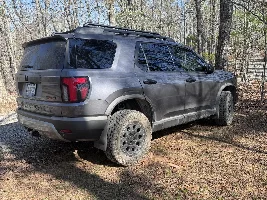
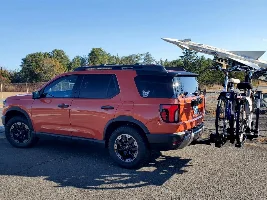
To everyone concerned about problems associated with Honda's V6 engine, which they use in virtually every big vehicle they make from the Odyssey, the Pilot, the Ridgeline and the Passport due to its VCM capability ( Variable Cylinder Management ), don't push the panic button just yet. I watched the video that was initially posted from beginning to end. The problems and pitfalls identified in that video really concerned particular model years in which that V6 engine was used. Honda's V6 has undergone quite an evolution over the years and it is now reached a point where many of the problems caused by variable cylinder management such as a vacuum created in the cylinders that were not being used and causing oil to be sucked through the rings and so forth and gasoline and diluting the lubrication, etc., etc. etc. have been largely worked out. I myself just purchased my 2026 passport trail sport in August having come from a 2017 Ridgeline, which served me well for over eight years and 153,000 miles. I make mention of this because the 2017 was the first model year of the second generation Ridgeline and I normally shy away from first year cars but the way it worked out I happened to need a new vehicle that year just as I needed a new vehicle this year and so I bought the passport and I'll go on to explain why.
As it turned out the 2017, 2018 and 2019 Honda Ridgelines were more problematic than later models of the second generation. This is not to say that they were bad vehicles at all. It's just that from a statistical point of view, they were more problematic than other years due to most of the technology being new in them. For instance, I received a notice from Honda in May of this year saying that a problem has been identified in the 2017, 18 and 19 Honda Ridge lines with respect to the torque converter in the transmission. As a consequence of this, they were extending the warranty on that particular part to 150,000 miles. I had 153,000 miles on my Ridgeline at the time the transmission warning light came on. An analysis of the code that it threw by my personal mechanic indicated that it was a torque converter problem. Having been a good customer of that dealership and having moved many cars for them, both personally ( I'm on my 4th Honda and my wife is on her 3rd ) and through family & friends of mine, I'm sure that more than likely they would have fixed it for me. However, the truck was already eight years old by this time and had been basically trouble free for me and so I didn't see the point in fixing such an old car that had not stung me in any way, so I just traded it in for the new Passport. In the 8 years I owned the ridgeline, the only thing I ever had to do to it over and above normal maintenance, was to replace a bad fuel injector. Being a fuss pot, I replaced all 6, but I didn't have to. I elected to get the Passport rather than a new Ridgeline, because the 2026 Ridgeline wasn't expected to be available until late 2025 or early 2026 and I need a new vehicle in August. Also, the 90lb dog I own is fr more comfortable in the back of my Passport SUV than on the floor of the rear seat of the Ridgeline so right now, an SUV was a better fit for the family and I don't need three rows. Hence, the Passport.
Now, the lockup torque converter problem that afflicted my 2017 Ridgeline and the two model years after that, was a problem associated with the 6 speed transmission used in those trucks, not the 9 speed auto that Honda made or the new 10 speed auto in the Passport. Also, the torque converter problem was related in some way to the VCM because it's engagement was tied to the VCM engagement.
The video shows and identifies all manner of problems and oil leakage in the affected bank of the V6 due to VCM even stating that it dripped on the alternator. It also cited problems with the motor mounts due to vibration caused by the VCM. I make mention of all this, because although my 2017 Ridgeline DID eventually manifest a torque converter problem, it didn't do so until 153,000 miles. Drive any vehicle long enough and problems will arise. NONE of the other problems associated with VCM manifested themselves on my truck. Since then, Honda has gone to great lengths to improve the situation and minimize or eliminate the problems previously associated with the VCM AND the 6 speed automatic transmission.
Accordingly, I don't expect the 2026 Honda Passport to be plagued by VCM / Torque Converter problems as previous versions of that engine and the old 6 sped tranny were. Therefore, I would advise against wasting time and money on VCM disabling devices, software / chips. etc. For one thing, installing one will void the factory warranty so everytime you bring the vehicle to the dealer, you will have to remove it. Why go through all that trouble and expense and risk voiding a warranty to guard against a problem that seems unlikely to manifest itself given the improvements to the engine and transmission? Food for thought.